Warning: sizeof(): Parameter must be an array or an object that implements Countable in /home/happyc25/public_html/wp-content/plugins/paypal-for-woocommerce/paypal-for-woocommerce.php on line 1080
Warning: sizeof(): Parameter must be an array or an object that implements Countable in /home/happyc25/public_html/wp-content/plugins/paypal-for-woocommerce/paypal-for-woocommerce.php on line 1080
In the practice of trataka an object is gazed at until its subtle form manifests in front of the closed eyes. The point of concentration is usually a symbol or object which activates the inner potential and can absorb the mind. The symbol most commonly used is a candle flame, because even after the eyes are closed, the impression remains naturally for some time, and then antaranga trataka can easily be performed. The purpose of focusing the eyes on an external object is to arouse the internal vision and make it absolutely steady by stopping the eye movements.

Trataka is a process of concentrating the mind to control its fluctuating tendencies. The one-pointed concentration of mind is termed ‘ekagrata’. Even when the eyes are focused on an object our mind is always fluctuating. When the same object is constantly seen, the brain becomes familiar and soon stops registering that object. This familiarization causes a reduced attention to the external world and ultimately brain stops funcationing. This is the case,, not only with trataka, but with any practices of concentration. When the awareness is restricted to one static stimulus, like touch or sound, the mind is ‘turned off’. Complete absorption in a single perception cuts the mind off from external world.
There are many other equally effective symbols for trataka apart from the candle flame, such as a crystal hall, a shiva lingam, yantra, mandala, the full moon, a star, the rising or setting sun (when it is orange, not yellow), a chakra, the symbol om or your own shadow. These are the most effective, but trataka can also be done on a rose, a tree, a mountain, the sea, the sky, a rock, a black dot or any object of your choice. However, one should be careful when selecting the trataka symbol. A steady flame of light is the most practical and safest, unless your guru advises you otherwise.
How To Perform Trataka
1. Practice in a dark room which is free from any disturbance. Place a candle at arm’s length in front of you with the flame at eye level it is important that the flame does not flicker in the least. Sit in a comfortable meditative pose and place the hands on the knees in either gyana or chin mudra
2. Relax your whole body close your eyes
3. Make yourself calm and quiet and keep still throughout the practice
4. Open your eyes and gaze at the middle portion of the flame
5. Gaze for as long as possible without blinking and without strain until the eyes begin to water or tire
6. You will be able to increase the time gradually with practice to ten minutes
7. Remain the silent witness just observing all thoughts and feeling arising.
8. You can take this practice forward by doing antaranga trataka or internal gazing. Try to see the object clearly and steadily in front of the closed eyes. Practice for five to twenty minutes
Best Time To Perform Trataka
Trataka can be done at any time but is more effective when performed on an empty stomach. The most suitable time is between six and eight in the morning after asana and pranayama practice.
Benefits Of Trataka
.According to the ‘Hatha Yoga Pradipika’ of Swatmarama, ‘Trataka eradicates all eye diseases, fatigue and sloth and closes the doorway creating these problems. It should carefully be kept secret like a golden casket.’ Trataka benefits not only the eyes but a whole range of physiological and mental functions. It is therapeutic in depression, insomnia, allergy, anxiety, postural problems, poor concentration,stress and memory.It encourages mindfulness.
Trataka unlocks the inherent energy of the mind and channelizes it to the dormant areas of the unconscious. Yogi Swatmarama mentions the arousal of clairvoyance but other capacities such as telepathy, telekinesis, psychic healing, etc., can develop. Not only that, further results of one-pointedness of mind are strong willpower, improved memory and concentrative ability. Physiologically, trataka relieves eye ailments such as eye strain and headache, myopia, astigmatism and even early stages of cataract. The eyes become clear bright and able to look beyond appearances.
What is the difference between trataka, yoga nidra?
The ultimate object of all these techniques is the same but the actual techniques are different. The common aim of yoga nidra, trataka is developing the faculties and controllingd distractions. Once we are bring stability to the mind we are able to go deep into ourselves and awaken the potential of our unconscious and subconscious minds.
In yoga Nidra we direct our mind consciously through the experiences of visualization, memory, sensations, etc. The aim of yoga nidra is not only to provide relaxation but also to give control and direction to the unknown potentials of mind.
Traditionally it is said that there are more than eighty stages of yoga nidra. It starts with simple body awareness but includes awareness of our inner self, knowledge of the karan sharir (causal body). It is a vast technique.
Trataka, on the other hand, is a very simple method of concentration or dharana. The simple act of holding the image in the mind for an extended period of time helps to focus the wavering energies of the senses, intellect and emotions at one point. This undivided concentration in which we are able to focus the mind consciously, first of all on a object and later on some concept or idea, is the purpose of trataka. It provides an unfluctuating and unwavering state of mind.
Warning: sizeof(): Parameter must be an array or an object that implements Countable in /home/happyc25/public_html/wp-content/plugins/paypal-for-woocommerce/paypal-for-woocommerce.php on line 1080
Mothers have a hard time managing the household chores and office work since there is no physical separation of office and house.Working from home moms tends to mix up office work and house hold chores which leads to confusion.I would say that work from home will turn into utter chaos unless there is some amount of planning ahead.
Given below are the tips to have a productive day at work as well as at home while you are working from home.
1.GET UP EARLY
This may sound like a cliché but it’s one the most important tip to be followed. Getting a head start means you can have your coffee in solace or do some early morning workout in peace. I would recommend not checking your mobile till 8.30 am in the morning. Modern day social media and emails can be distracting and will make you lose focus on important things.I would even recommend planning your day ahead like what to cook, when to exercise or when to those errands done.
2.COOK OR MAKE PREPARATIONS FOR LUNCH AND DINNER BY 8:30 AM
This is the second most important point.
You must be thinking how on earth I would do that with such a frantic morning schedule but let me tell you if you make some preparations like boiling rice or veggies for dinner, it’ll make your evenings less hectic.
I would seriously recommend you to cook or at least make preparations like cutting veggies, boiling or preparing dough (or anything which will save time in the evening for you)
Also stick to something simple and healthy as far meal planning goes.
3.TAKE SHOWER AND READY DRESSED UP BEFORE OFFICE HOURS.
If your office hours start at 9 am, it’s better for you to take shower and get dressed up before that. Doing so many chores early in the day may leave you little tired and a shower may get you ready for work.
4.DO EXERCISE
Another cliché but as study proves exercise is an effective stress reducing mechanism.We as moms need some stress relieving techniques at most.
I would recommend 30 minutes to 45 minutes of walk or yoga or any cardio to keep you healthy and stress free.
5.DO YOUR LAUNDRY AND DISHES BEFORE SLEEPING.
I know you would be so tired by the end of the day and you can’t wait to reach your bed. Having clean dishes and laundry is a blessing and if you are not able to do it get your husband or partner do this thing for you, afterall you have been doing one or the other from morning.
]]>
Warning: sizeof(): Parameter must be an array or an object that implements Countable in /home/happyc25/public_html/wp-content/plugins/paypal-for-woocommerce/paypal-for-woocommerce.php on line 1080
What is yoga Nidra or Guided Mediation?
The phrase itself is an explanation of its meaning. If you still find it somewhat vague, picture these: a person or a group of people meditating and guided through the process by a professional guide; a person reading a meditation script while you meditate; a cassette or CD you bought or prepared yourself to help you through the mediation process. All of these are examples of a guided meditation. Since one is supposed to acquire a state of deep relaxation during any meditation, guides are a good motivator.
How to do Yoga Nidra?
So what is nice about a guided meditation? Well for one a guided meditation is often cheaper than a private session. If you use tools like CD’s or cassettes or if you ask the help of a friend to guide you, it wouldn’t cost you as much as a private session would. Though, these private sessions are considered as guided meditations as well. A guided meditation can make you understand the basics of meditation more clearly. It can help you get rid of all distractions and meditate more effectively. Most of the group guided meditation has particular goals, from physical healing to spiritual-related goals. While guided meditation may be used to achieve healing, the guides are not the healers though. Your naturally healthy state is just being restored through the flow of energy freed by your meditation.
A lot of websites offer information on self meditation and guided meditation. It is a virtual guided meditation room of some sort with the same goals – to provide you minutes of deep relaxation and reflection.

Why Yoga Nidra?
In the deep Yoga Nidra, we use seven of the major chakras to contact the various planes of consciousness.Generally Yoga Nidra uses the mantras (certain sound syllables) connected to each chakra.
The chakras have corresponding areas in the brain. When they are relaxed and harmonized during Yoga Nidra, the release of unwanted states such as confusion and lack of concentration begins.
The awakening of consciousness through Yiga Nidra releases tensions and lethargy, thereby healing illnesses; but primarily, it brings you into contact with all parts of your being.
The guidance in Yoga Nidra through the different areas of the body and mind, does not only make the body more conscious and more relaxed and awake, but trains your ability to utilize the various regions of the brain, both those connected to the physical body and those connected to the chakras. YogaNidra is capable to open up a previously unknown capacity for communication, insight and creativity.
Some guided meditations provide around thirty minutes of relaxing music to calm the mind and body. A guide’s voice can sometimes be heard over the beat of the music to cue you on what to think of and how to stay more deeply focused. These guided meditations can be practiced alone or with a group. Using CD’s or cassettes commercially available will also give you the same features.
A guided meditation is perfect for people who are still learning the basics of meditation. While it may be somewhat lengthy for those first timers, it can still provide them with a lot of tips on how to go about acquiring a feeling of deep calmness.
]]>Warning: sizeof(): Parameter must be an array or an object that implements Countable in /home/happyc25/public_html/wp-content/plugins/paypal-for-woocommerce/paypal-for-woocommerce.php on line 1080


Warning: sizeof(): Parameter must be an array or an object that implements Countable in /home/happyc25/public_html/wp-content/plugins/paypal-for-woocommerce/paypal-for-woocommerce.php on line 1080
Yoga began in India 3,000 to 4,000 years ago. The word yoga comes from the Sanskrit language and means, to join or integrate, or simply union. Union with higher intelligence, absolute or God. This union is achieved by keeping physical health, mental and spiritual health is good condition. It’s a science developed for humans to raise above differences and realize that we are all sparks of the same fire. Physical health is just a side effect of yoga.
We live in a sound-byte age where our daily demands leave us with little time for exercise, at least in the mornings when it may perhaps be most efficient. Yoga increases and maintains flexibility as my yoga guru used to say “Flexible body is the sign of Youth”. Let’s see busy moms, working people can fit yoga into their lives.
Yoga is a set of asanas making your body twist and turn and it’s up to you to pick and fit the asanas which you require the most .You can select by understanding which body part of yours requires attention and do the associated asana for benefit. However I am going to give general asanas which will benefit everyone and all you need is 15-20 minutes daily
You can begin with your day with these yogic practices
- Om chanting: 3 -5 times. Length of sound ‘au’ should be less than ‘mmm’. 1-2 minutes
- Kalpalbathi pranayama: Please find the attached link here on how to do.I would recommend watching video for this pranayama here. Video is in Hindi but i think you can get the visuals of how the pranayama is done.The reason i shared his video is he’s authentic yoga guru and i do not want anyone to learn wrong practices.7-8 minutes
- Suryanamaskara cycle: Otherwise known as sun salutations should be done facing sun. One set of suryanamaskara has 12 steps as shown in the figure below and One cycle of suryanamaskara has 14 such sets.One cycle of suryanamaskara takes around 9 minutes and should be followed by 1-2 minutes of savasana.

This complete routine would take you around 20-22 minutes
I have not mentioned the benefits of kapalbathi and suryanamaskara in this post. Their benefits on human body is so huge that no amount of words will do justice to these yogic practices. You can include more asasnas sarvangasana, chakra asana, sirasasana according to your time.

Take Control Of Your Life Now!Learn The Best Yogic Practice You Should Follow For FREE Today By Subscribing To Us.Click here to subscribe
]]>
Warning: sizeof(): Parameter must be an array or an object that implements Countable in /home/happyc25/public_html/wp-content/plugins/paypal-for-woocommerce/paypal-for-woocommerce.php on line 1080
There are 4 different types of Yoga. All the paths of yoga lead to the same experience. The realization is the same. It is only the means that is different. All the paths of yoga aim at reducing and eventually eliminating the ‘I’ factor within us. All paths pf yoga will awaken your Chakras.
Karma Yoga is the Yoga of Action. It purifies the heart by teaching you to act selflessly, without thought of gain or reward. By detaching yourself from the fruits of your actions and offering them up to God, you learn to redirect the ego.
Bhakti Yogi is love for God or divine existence. Through prayer, worship and ritual he surrenders himself to God. Chanting or singing the praises of God form a substantial part of Bhakti Yoga.
Raja Yoga is also called Ashtanga Yoga referring to the eight limbs leading to absolute mental control. The chief practice of Raja Yoga is meditation and physical exercises. It also includes all other methods which helps one to control body, energy, senses and mind. This is the yoga which we are familiar with and which uses physical exercises to bring mind and body in balance.
Jnana yoga is path of knowledge. Aspirant seeks answers through his intellect. The Jnana Yogi uses his mind to inquire into his own nature.
All the paths merge with each other, for they are like different petals on the same flower. All paths leads to Bhakti. Bhakti leads to karma as well as jnana. In the beginning the aspirant must tread that path (or paths) that suits his or her temperament.
Bhakti yoga is the yoga, of love and devotion. It is devotion to the divine, in whatever form you see.
It can be devotion to truth, God, the Supreme, Brahman, the Absolute Reality or any other name that you want to call the indefinable. It can be devotion to Christ, Buddha. Mohammed, Krishna, Rama, Hanuman, Mahavira, Shakti, Shiva, Vishnu, Kali, Durga. It can be your Guru. The specific form is unimportant it is the devotion that you personally feel that is essential.
It is overwhelming devotion to your deity or divine existence. According to Swami Ramdas, “Unless you have a burning aspiration for the Supreme, the mind cannot be fixed on That. Where your love is, your mind is also. Just as a miser thinks of money and of money alone, so a bhakta has exclusive devotion to the Supreme”.
Who can follow Bhakti path?

If one is devotionally inclined or emotional bhakti yoga is best suited for them. They can channelize their emotions to single pointed devotions towards God. This will prevent unnecessary pent up of emotions which may cause violent outbreaks.
If one is not devotionally inclined, then the other paths of yoga can be followed instead. These other paths will eventually lead to spiritual experience. This in turn will automatically lead to Bhakti. All paths lead to same destination.
Love of Everything
This is love of the divine in everything. One sees beauty and perfection everywhere. Wherever one looks one sees the form of the divine. There is love for everything. One looks outwards and sees only the works and essence of the Supreme. This is an intoxication of bliss. It is both, love for everything and love for nothing specifically.
Do not expect anything from your practice of Bhakti yoga. This also applies to any other form of yoga. If you practice asanas, pranayama, meditational practices and so forth, try not to expect anything. Because the more one expects, the less one will receive This is because expectation implies ego and the greater the ego, the less one will make progress in yoga. This is very important.
Non-expectation is a fundamental aspect of Bhakti yoga. This was briefly stated by Chaitanya, the great Bengali Saint. He said, “I pray not for wealth; I pray not for honours; I pray not for pleasure, or even the joys of poetry. I only pray that during my whole life I may have love and devotion… That I may have pure love to love Thee”.
Given are few important ways of bhakti yoga
I. Satsang -The Sanskrit root ‘sat’ means reality, divinity and purity; it represents Self or God. Satsang does not mean being in the company of many people; that is known as ‘sangha’, which means company or association. Satsang is being in the company of truth. In Satsang the most important thing is the constant movement of ideas related to the ultimate reality, divinity or highest being. Maintaining good company with similar spiritual interests,
II. Hari Katha – Hearing about the lives of those people who have had divine experiences and who have suffered or lived for the higher experience. Hearing the stories of how saints were able to reach the higher consciousness inspires and guides us to accept a different lifestyle and mode of behavior.
III. Mantra Japa – Japa is not only the repetition of God’s name, or religious and mystical identification. It is not even repetition of a mantra. It is constant remembrance that I, who live in this body, the individual self, and the cosmic self which pervades the entire universe, are one. In japa, the essence has to be realized. However, in order to come to this level of japa, we have to begin with a mantra and a mala, because when we repeat a mantra psychically, changes take place. Externally, we feel a sense of happiness, quietness, peace, contentment, and a release of stress. Other symptoms are experienced internally at a deeper psychic level of which we are not aware. They represent the changing of the energies which govern the body and mind, the awakening of the pranas in the body and mind
IV. Atma Nivedan – total surrender, total fusion, total merger. Atma means ‘self and nivedan means ‘to offer’. It happens when even the last hint of individual identity is dissolved in cosmic awareness. It can occur physically too. As you go through the different processes of bhakti, it is not only the mind which evolves, but also the body. Each and every atom of the body becomes enlightened.
V. Ishwara Pranidhan– It is seeing the spark of life and divinity in each and every one. There should be no distinction between one person and another. There should be no concept of high and low, but there is identification. Just as I can identify with God there, I should be able to identify with God here, in you, in me, even in different forms of creation.
Warning: sizeof(): Parameter must be an array or an object that implements Countable in /home/happyc25/public_html/wp-content/plugins/paypal-for-woocommerce/paypal-for-woocommerce.php on line 1080
ASSOCIATED CHAKRAS: Vishuddhi (throat chakra), Agna ( chakra between eyebrows)
COLOR: Deep blue or Deep marine blue.
HEALING PROPERTIES: A very marked healing crystal for problems associated with thyroid, parathyroid and ENT associated problems. Lapis lazuli works eminently for the Agna chakra and enhances vision, focus, neurological functions and also heals problems associated with pituitary glands.
You can know more about how gemstones heal here.More about chakras here
Lapis lazuli can be synonymed as an aegis of the throat and eyebrow chakras. Lapis lazuli was extensively used by kings and saints in ancient time as it is believed to keep the mind focused, and helps in very clear expression of ideas. Lapis lazuli’s deep blue color helps calm the mind, reduce stress, think accurately and follow the instincts.
Hence, since ancient times lapis lazuli has very high importance and played a major role in bringing success to people. Lapis lazuli also works very well for people with poor self-esteem, self-expression, grasping abilities, to overcome inability to tell truth, fears about oneself, difficulty in expressing thoughts and communication. Lapis lazuli along with the above properties, also helps to beat depressions, improves blood circulation, brings harmony. Lapis lazuli helps triumph anxiety, shyness, insomnia, vertigo.
HOW TO USE LAPIS LAZULI: Lapis lazuli can be worn as a pendent, a small bracelet
Lapis Lazuli has high importance in Feng-Shui and has proven to be very successful in bringing prosperity, peace and success to the house, It can be kept in living room or in the bed room near the bed. But when placed in specific directions has very special effect. If lapis lazuli is placed in south-east it brings wealth and abundance and also neutralizes negative vibrations, for success in career and to improve career plans its best to keep in north direction of the house.
]]>Warning: sizeof(): Parameter must be an array or an object that implements Countable in /home/happyc25/public_html/wp-content/plugins/paypal-for-woocommerce/paypal-for-woocommerce.php on line 1080
here
There are six important Chakras: Muladhara, Svadhisthana, Manipura, Anahata, Vishuddha, and Ajna. Sahasrara is the chief Chakra. It is in the head. These 7 Chakras correspond to the Lokas (Bhuh, Bhuvah, Svah, Maha, Jana, Tapa, and Satya Lokas).
Kundalini is known as the supreme power, in the form of a coiled serpent, residing in Muladhara Chakra.All spiritual seekers make efforts in the form of meditation and prayer as well as in development of virtues like truth, non-violence. These people are in best spot to awaken this serpent-power and make it to pass through all the Chakras from Svadhishthana to Sahasra. The Sahasra is the seat of Lord Shiva. Kundalini is conceived as a goddess, when it rises and moves and it unites itself with the Supreme Being (Lord Shiva) in the sahasra chakra. Then the aspirant becomes engrossed in deep meditation and infinite bliss.
When Kundalini is awakened it passes on from Muladhara to Sahasra through all the Chakras. At every centre to which the Yogi directs the Kundalini, he experiences a special form of bliss. He enjoys the Supreme Bliss when Kundalini is taken to Sahasrara Chakra.
Each Chakra has a particular number of petals with a Sanskrit alphabet on each petal. The vibration that is produced at each petal is represented by the corresponding Sanskrit letter. Every letter denotes the Mantra of godess Kundalini. The number of petals of the lotuses varies. Muladhara, Svadhishthana, Manipura, Anahata, Vishuddha and Ajna Chakras have 4, 6, 10, 12, 16, and 2 petals respectively. The number of petals in each Chakra is determined by the number and position of the Yoga Nadis around the Chakra.From each Chakra a particular number of Yoga Nadis crop up. The Chakra gives the appearance of a lotus with the Nadis as its petals. The sound produced by the vibrations of the Yoga Nadis is represented by the corresponding Sanskrit letter. Muladhara to Vishuddha are the centres of Pancha Bhutas (five elements): earth, water, fire, air and ether. Each chakra is characterized by an element. when the ancient Indian saints talked about earth, water, fire, air and ether, they were not talking about earth that you can run your hands through, or actual water that you drink;
It represents the earth, which signifies solid and concrete;
water, the principle of anything which as a liquid aspect to it;
fire, the principle is heat, anything which produces heat automatically;
air, the gaseous in nature;
and finally, ether which belongs to entire electromagnetic spectrum
Each one of us represents a microcosm, or a little being inside ourselves. We have within us these very elements. Please check the below the chart for the elements and attributes associated with each chakra.
| chakras | Muladhara | Swadhishthana | Manipura | Anahata | Vishuddha | Ajna | Sahasra |
| Location or Position | The root of reproductory organ and anus. At the base of spinal column | The origin of the reproductory organ. | Navel or Nabhi | Heart | At the base of the throat | At the space between the two eyebrows | Brain |
| Petals or number of Yoga Nadis | 4 | 6 | 10 | 12 | 16 | 2 | 1000 |
| Mandala or the region of Tattva | Region of the Earth | Region of the water | Region of Fire | Region of Air | Region of Ether | Region of Mind | MIND |
| Colour of Tattvas | RED | ORANGE | YELLOW | green | Blue | voilet | Crystal or white |
| Function of Tattva | smell | taste | Sight | touch | hearing | Mind | MIND |
| Goddess | Dakini | Rakini | Lakini | Kakini | Shakini | Hakini | LORD SHIVA |
| Deva or GOD | Prithvi | Varuna | Agni | Vayu | Akasa | Manas | LORD SHIVA |
| Bija MANTRA | LAM | VAM | RAM | YAM | HAM | OM | SILENCE |
]]>
Warning: sizeof(): Parameter must be an array or an object that implements Countable in /home/happyc25/public_html/wp-content/plugins/paypal-for-woocommerce/paypal-for-woocommerce.php on line 1080
One important measure is keeping these chakras clean .They get choked blocking natural flow of energy. When a chakra has toxic energy in it then it is blocked, Yoga believes that purification of chakras heals our bodies and advance us in our spiritual pursuits. There are various ways to purify chakras.
Opening chakras is a strenuous process and we are not aiming at opening chakras.
It is important to remember that good diet and developing virtues goes a long way in purifying chakras.
Various yoga asanas, mudras , bandas and meditation are developed primarily for purification of chakras and Nadis in our subtle body.
I’ll discuss how we can use the crystals to purify chakras .You can find how crystals work on our body here.
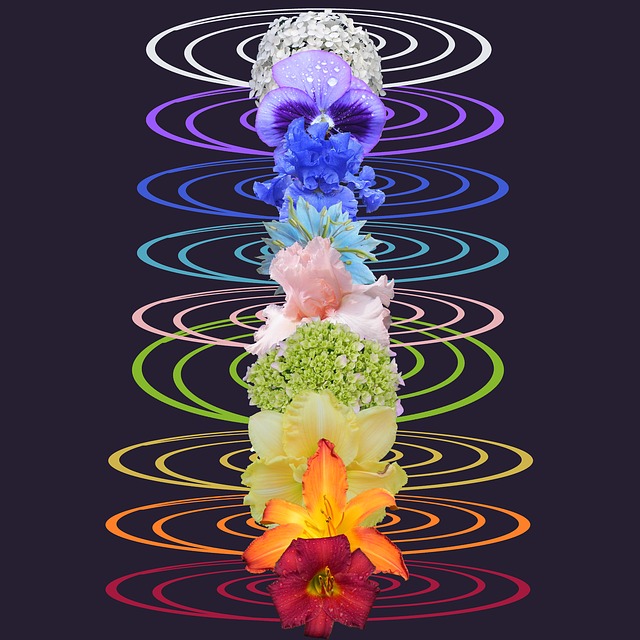
1st Chakra (Root): RED
Organs: physical body support; base of spine; legs, bones, feet, rectum, and the immune system. Gemstone: Red Jasper
2nd Chakra (Navel/Spleen): ORANGE
Organs: Sexual organs, large intestine, lower vertebrae (lumbar/coccyx), pelvis, appendix, bladder, and hip area. Gemstone: Carnelian
3rd Chakra (Solar Plexus): YELLOW
Organs: Abdomen, stomach, upper intestines, liver, gall bladder, kidneys, pancreas, adrenal glands, spleen, and middle spine (thoracic vertebrae).Gemstone: Amber
4th Chakra (Heart): GREEN
Organs: heart and circulatory system, lungs, shoulders and arms, ribs/breasts, diaphragm, and the thymus gland.Gemstone: Green Quartz
5th Chakra (throat): BLUE
Organs: throat, thyroid, trachea, neck vertebrae (cervical), mouth, teeth and gums, esophagus, parathyroid and hypothalamus.Gemstone: Lapis Lazuli
6th Chakra (Brow): INDIGO/PURPLE
Organs: Brain, nervous system, eyes, ears, nose, pineal gland, and the pituitary gland.Gemstone: Amethyst
7th Chakra (Crown): WHITE/GOLD
Organs: Muscular system, skeletal system and skin.Gemstone: small quartz crystal
Seven chakra Meditation
1. Keep your chakra crystals always together so that you don’t lose them .Its better when they are together in a pouch or purse.
2. Choose a time when you would be least disturbed. It is better to have well ventilated room.You shouldn’t be disturbed during the process.
3. Wear loose, comfortable clothes. Keep your shoes off. Lay down on the floor or lay down on your bed.
4. Place the RED stone on place where your legs join the trunk portion.
6. Place the ORANGE stone on your abdomen (2 inches below your navel).
7. Place the YELLOW stone over your belly button.
“/>
8. Place the GREEN stone in the center of your chest where your heart rests.
9. Place the BLUE stone in the root of your throat.
10. Place the PURPLE stone in between your eyebrows.
11. Place the quartz crystal, point TOWARD the center or top of your head.
12. Close your eyes. Take few deep breaths.
13. Concentrate on each chakra starting with mooladhara chakra all the way till Sahasra chakra.
14. Repeat the Bija mantra for each chakra 10 times I,e
| Bija mantra for each chakra | Muladhara | Swadhishthana | Manipura | Anahata | Vishuddha | Ajna |
| Bija MANTRA | LAM | VAM | RAM | YAM | HAM | OM |
Notice that there is no mantra for sahasra chakra since remaining silent is the mantra for sahasra chakra.
14. If thoughts come into your head, let them come and go without any attachment. done, pick up the stones in REVERSE ORDER, starting with the quartz crystal, then the PURPLE stone, the BLUE stone, and so on.
16. Put your crystals into a salt bath for 1 hour. This means placing them gently in a bowl of warm water that has 1 teaspoon of sea salt in it. This cleanses them off. After an hour, pour off the salt water, wash them with fresh, warm water, dry them off and put them back into your pouch.
If you will do this 2-3 times a week, for a month, you’ll find you have more energy, your mind is clearer, sharper, more focused.
]]>